


Home > Ball Baffles > How Ball Baffles Improve Tanker Safety & Stability

How Ball Baffles Improve Tanker Safety & Stability

Whether you are hauling water for dust suppression, carting diesel to a remote site, or transporting liquid fertiliser, one force remains your greatest enemy: liquid surge.

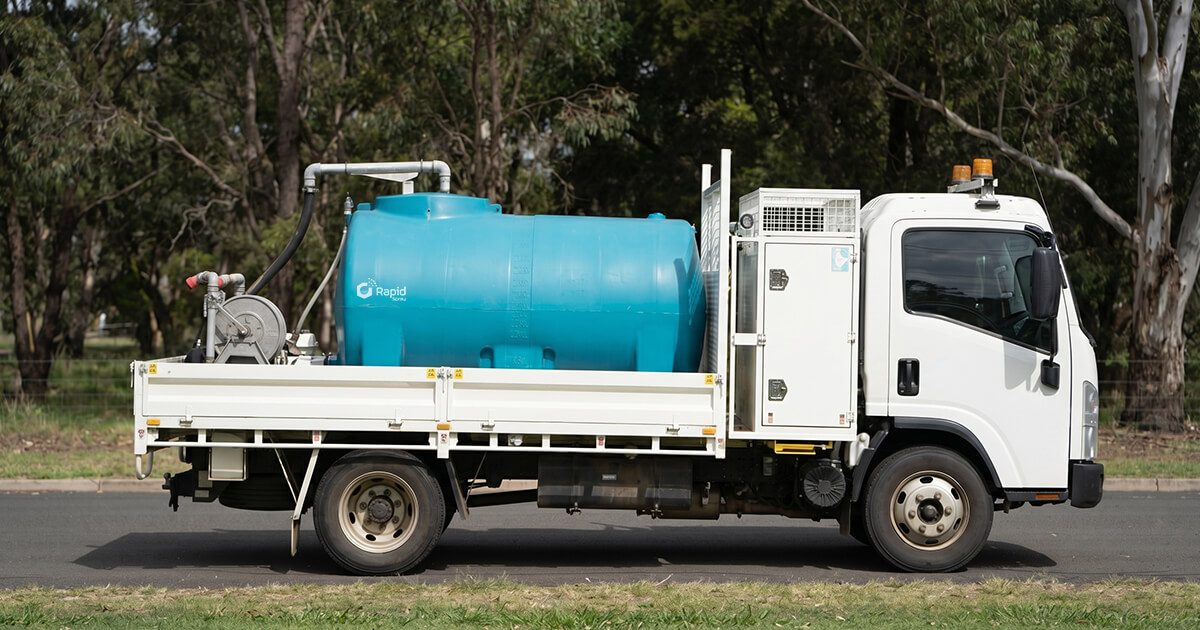
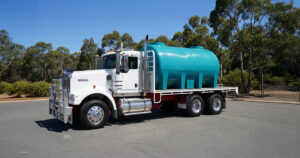
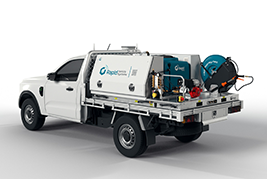
Rapid Spray slip-on water cart mounted on a flatbed truck for agricultural and civil water applications

In an un-baffled tank, the movement of liquid during braking or cornering creates a massive shift in weight that can lead to increased stopping distances, mechanical wear, and the dreaded “rollover.” While traditional fixed baffles help, the Rapid Spray Ball Baffle system offers a 360-degree solution that is changing the game for tankers ranging from 100L to 60,000L.

In this guide, we’ll break down why these “honeycomb” systems are superior to traditional methods and help you choose the right product for your setup.

What Is Liquid Surge in Tankers?

Liquid surge refers to the movement of fluid inside a tank during braking, acceleration, or turning.

When a tank is partially filled, the liquid shifts unpredictably, creating:

  • Forward force when braking
  • Side-to-side movement when cornering
  • Increased rollover risk

This movement directly impacts vehicle handling and operator safety

Why Liquid Load Stability Matters

Uncontrolled liquid movement does more than make driving uncomfortable, it creates real operational risks.

Liquid surge can:

  • Reduce driver control
  • Increase stopping distance
  • Put stress on the vehicle and tank
  • Increase the risk of accidents

For operators managing water cartage tanks, spray units, or firefighting systems, stability is essential for both safety and performance.

How Ball Baffles Improve Tanker Safety

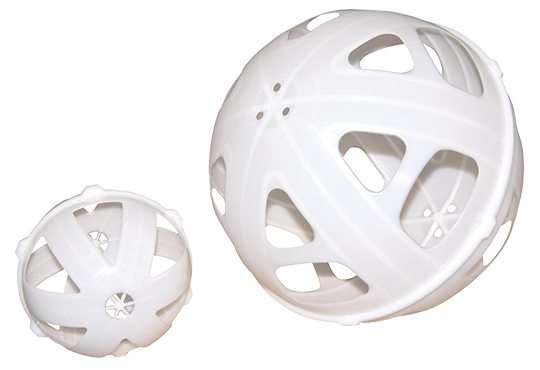
Ball baffles are specially designed spherical inserts placed inside the tank to control liquid movement.

They work by:

  • Disrupting fluid flow
  • Breaking up wave momentum
  • Reducing the force of liquid surge

Instead of one large mass of liquid shifting, the movement is dispersed, resulting in a more stable load.

The Results:

  • Improved braking control
  • Greater stability when cornering
  • Safer operation across uneven terrain

Ball Baffles vs Traditional Baffles

Traditional fixed baffles use fixed internal walls to restrict liquid movement. They are heavy and only stop surge in one or two directions. Ball Baffles, however, work on a displacement principle. Once your tank is filled with these high-impact polypropylene spheres, they create a dense, interlocking “honeycomb” structure.

The Results:

  • 70% Increase in Stability: By breaking up the energy of moving liquid in all directions, you significantly reduce the “sideways rocking” common in high-profile tanks.
  • 60% Faster Braking: By eliminating the forward “push” of liquid when you hit the brakes, your vehicle stops shorter and safer.
  • Reduced Maintenance: Less surge means less stress on your tank walls, chassis, and brakes, extending the life of your equipment.
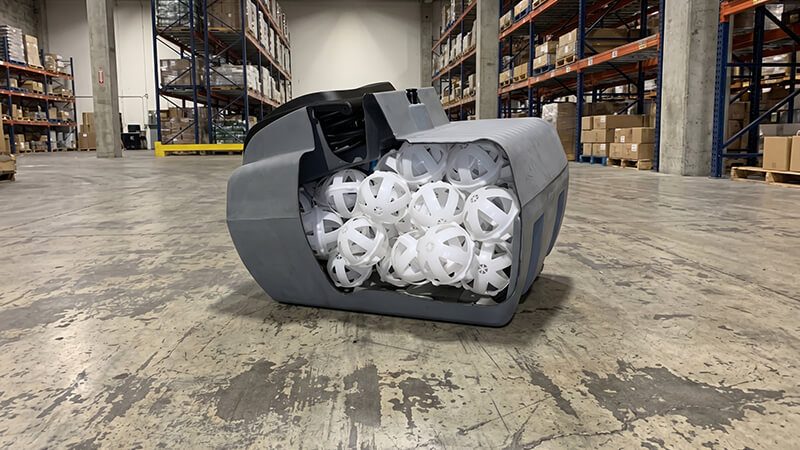
Cutaway view of diesel fuel pod highlighting ball baffle system for improved fuel stability and reduced surge

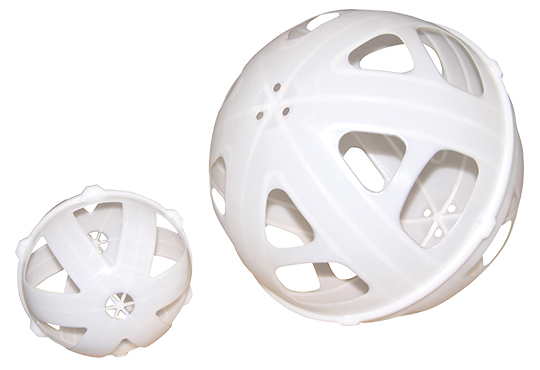
Product Comparison: Small vs. Large Ball Baffles

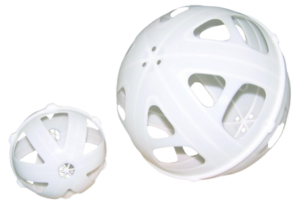
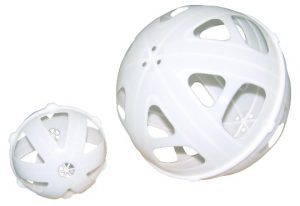
Choosing the right baffle depends primarily on your tank’s access point (hatch diameter). Both models are made from food-grade, chemical-resistant polypropylene, making them suitable for water, diesel, and most agricultural chemicals.

FeatureSmall Ball BaffleLarge Ball Baffle
Diameter195mm355mm
Dry Weight126g per ball478g per ball
Best ForTanks with small hatches (<450mm)Large tankers with standard hatches
Usage Ratio1 ball per 7 Litres1 ball per 40 Litres
Box Quantity44 balls25 balls

How Many Do You Need?

Calculating your requirement is straightforward. To ensure 100% effectiveness, the tank must be completely filled with baffles so they cannot move around.

The Formulas:

  • For Large Baffles: Total Tank Litres ÷ 40 = Number of Balls Required
  • For Small Baffles: Total Tank Litres ÷ 7 = Number of Balls Required
 
Example: If you have a 10,000L Steel Tanker, you would need 250 Large Ball Baffles (10,000 / 40).

Installation in 3 Simple Steps

You don’t need a mechanic or specialized tools to install this system. It can be done on-site in a matter of minutes.

  1. Clip: The balls come in two halves. Use a simple “click and turn” motion to snap them together permanently.
  2. Insert: Drop them through the manhole or access plate.
  3. Fill: Continue adding balls until the tank is physically full.

Pro Tip: After your first load, check the tank. The balls may settle into the corners, and you might need to add a few more to keep the “honeycomb” tight.

Versatility Across Industries

Because they are food-grade and highly chemical resistant, Ball Baffles are the go-to choice for:

Agriculture

From crop spraying to livestock water transport, stability is essential when operating spray units and tanks in the field. Controlled liquid movement improves accuracy and reduces operator fatigue.

Civil & Council Operations

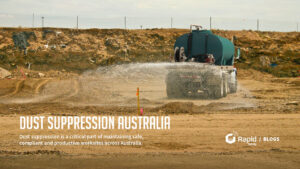
For dust suppression, road maintenance, and vegetation management, stable loads mean safer operation on public roads and work sites.

Firefighting

In emergency situations, having a stable water load allows for safer and faster response, especially when operating on uneven or off-road terrain.

Fuel Transport

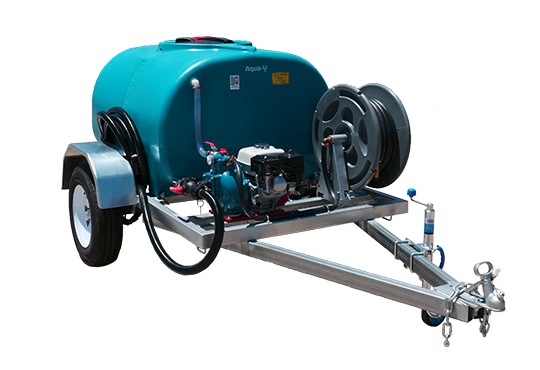
When transporting diesel or fuel, liquid surge can significantly impact vehicle stability, especially during braking and cornering. Using systems designed to reduce movement helps improve handling, reduce risk, and support safer fuel delivery operations across worksites, farms, and remote locations.

Frequently Asked Questions

What causes tanker instability?

The main cause is liquid surge inside partially filled tanks, which shifts the vehicle’s centre of gravity.

Do ball baffles stop liquid movement completely?

No, but they significantly reduce surge by dispersing and controlling fluid motion.

Are ball baffles better than traditional baffles?

In many applications, yes. They provide more flexibility, easier maintenance, and consistent performance.

Can ball baffles be used in different tank types?

Yes, they are suitable for a wide range of tanks used in agriculture, civil, and industrial applications.
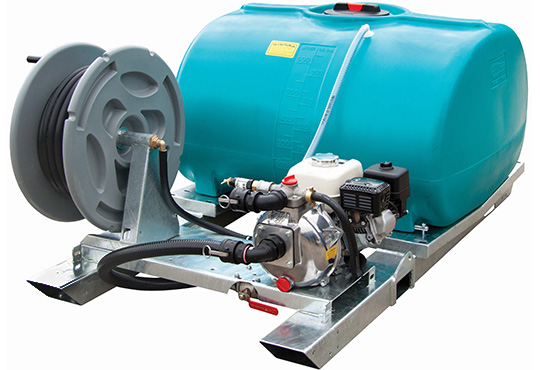
Ready to stabilise your load? Explore the Small Ball Baffles for smaller poly tanks or the Large Ball Baffle system for heavy-duty tankers.
For more information or to request a Test Engineers Report, contact the Rapid Spray team at 1800 011 000.

PROUDLY AUSTRALIAN MADE!
*Made from Australian and Imported Componentry