- Products
- Parts
- Parts Kits
- Tank Parts
- Spray Equipment
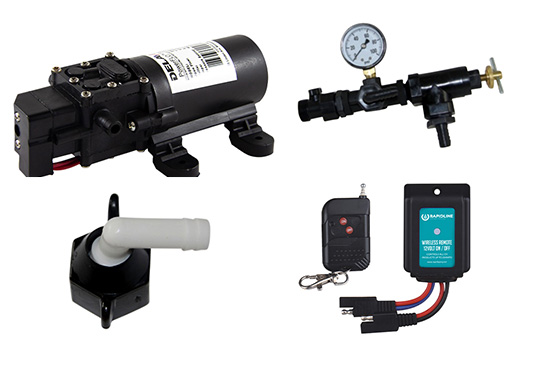
12V Pumps, parts & accessories
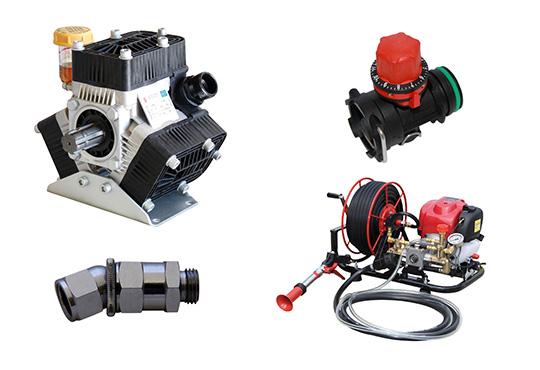
Engine & PTO Drive Pumps, parts & accessories
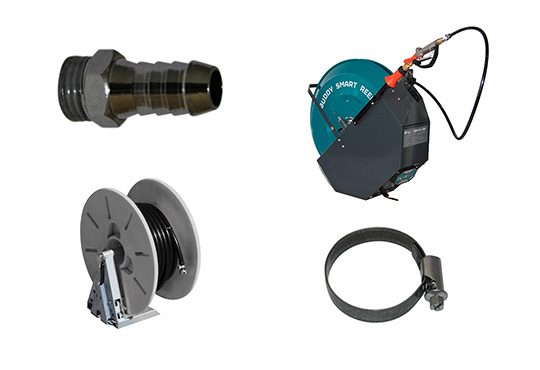
Hose Reels & Parts
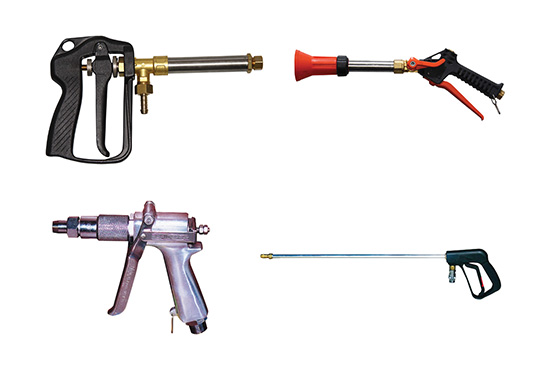
Spray Guns, Lances & Accessories
12 Volt Spot Sprayer Parts & Accessories
Backpack, compression & trolley sprayer parts
Spray Tank Lids, basket filters & outlets
nozzles, boomless nozzles & boom accessories
Other Spray Parts & Accessories
Batteries & Chargers
- Diesel Refuelling Parts
- Fire Fighting Parts
- Mining & Industrial
- STOCKING DEALERS
- Resources
- Customer Hub
- Specials
- Contact Us
How Weeds Cost Wool Growers Thousands, And What You Can Do About It
A few thistles in a garden bed might just be a weekend nuisance, but in wool production, weeds are a multi-million dollar problem that quietly erodes profitability at every stage of the clip.
Most wool growers know weeds are a problem. What’s less talked about is just how far that problem reaches. It’s not just about a messy paddock or a bit of competition for grass. Weeds affect the clip, the sheep, and ultimately, the cheque. And in many cases, the damage is already done by the time it shows up at the wool board.
Here’s a closer look at the real cost of weeds on a wool-producing property.
 Vegetable Matter: The Contamination That Follows the Clip
Seeds, burrs, and plant stems that end up in the fleece are classified as Vegetable Matter (VM), and they’re one of the most expensive problems a wool grower can face at auction.
Burrs don’t let go easily
Noogoora burr and Bathurst burr have hook-covered surfaces that are purpose-built to grab onto wool fibres. Standard scouring during processing isn’t enough to remove them reliably, which means the contamination travels all the way through to the end buyer.
Heavily contaminated wool gets sent to carbonising
When VM levels are too high to process normally, the wool has to undergo carbonising, a chemical treatment using acid to burn out the plant material. It’s an expensive step that adds cost, uses significant energy, and can leave the fibre slightly weaker than it would otherwise be.
Buyers price in the problem
At auction, wool is assessed on yield. A fleece carrying a high VM load is going to attract a discount because the buyer already knows what it’s going to cost them to deal with it. That discount comes straight off the grower’s return.
Staying on top of weeds like Bathurst burr and Noogoora burr before they go to seed is one of the most direct ways to protect wool value. A boom sprayer or ute-mounted spraying unit used early in the season can make a significant difference to VM levels at clip time.
Animal Health: The Costs That Don’t Show Up in the Clip
Weeds cause harm well before shearing. Some of that harm is visible, but a lot of it quietly adds up through poor condition, veterinary bills, and in the worst cases, livestock losses.
Grass awns are a persistent problem.
Sharp awns from Barley Grass and Spear Grass work their way into a sheep’s skin, eyes, and mouth. This causes pain and infection, and can lead to seed pull, where the seed migrates into the muscle tissue and devalues the carcase at slaughter. It’s a cost that doesn’t show up in wool receipts but still hits the operation hard.
Some common pasture weeds are toxic.
Patterson’s Curse is well established across much of southern Australia and causes liver damage in sheep that graze it heavily. Certain Nightshade species can cause sudden death. These aren’t rare occurrences in unmanaged pastures. They’re documented risks that growers deal with every season.
Photosensitisation gets underestimated
A number of weed species contain compounds that make sheep abnormally sensitive to sunlight. Affected animals develop blistering and swelling on exposed skin, typically the face and ears. By the time it’s visible, the sheep have often been suffering for some time.
Controlling problem weed species before they establish in a paddock is far more cost-effective than managing the animal health fallout afterwards. Spot spraying targeted infestations early in their growth cycle is one of the most efficient approaches.
Wool Quality: The Damage That Happens Before Shearing
Even without visible contamination, weeds can quietly degrade the physical quality of the wool fibre.
Nutritional stress causes fibre breaks
When weeds outcompete pasture grasses, the sheep’s diet suffers. Poor nutrition, particularly during periods of high feed demand, causes the wool fibre to develop a weak point along its length. This is called a break, and it means the staple snaps during spinning rather than drafting cleanly. The result is shorter fibre and a lower-value product.
Organic staining is hard to fix
Some weed seeds leach pigment into the fleece when wet. Unlike soil-based staining, these organic pigments often can’t be removed in processing, which rules the wool out for light-coloured and pastel dye lots entirely. For growers producing fine or superfine wool for apparel markets, that’s a significant quality hit.
Keeping pastures productive and free of dominant weed species helps maintain the nutritional plane sheep need to grow strong, consistent fibre. Pasture renovation spraying used in combination with good grazing management is worth looking at if weed competition is an ongoing issue.
The Real Cost at a Glance
| Problem Area | What Happens | Financial Impact |
|---|---|---|
| Vegetable Matter | Seeds and burrs tangle in fleece | Higher processing costs, lower yield price |
| Pasture Competition | Less nutritious feed available | Slower growth rates, thinner wool |
| Seed Penetration | Skin and eye infections | Vet bills, carcase devaluation |
| Toxic Plants | Liver damage or death | Direct livestock loss |
Why Early Weed Control Makes Financial Sense
The growers who come out ahead on weed management aren’t necessarily the ones spraying the most. They’re the ones spraying at the right time. Getting onto weeds before they set seed stops the problem from compounding season after season. It protects pasture productivity, reduces VM risk, and keeps the flock in better condition going into shearing.
Reactive weed control, dealing with established infestations after they’ve already caused damage, costs significantly more in both product and time than a well-timed early application.
Getting on top of weeds before they get into your clip?
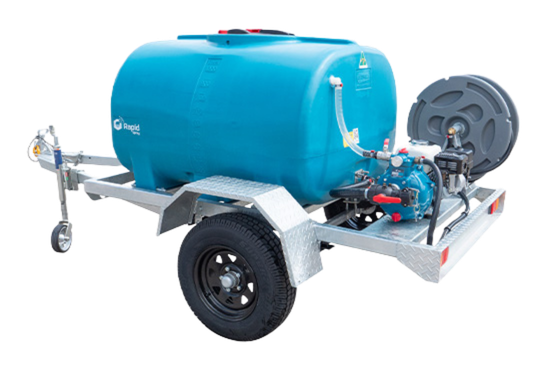
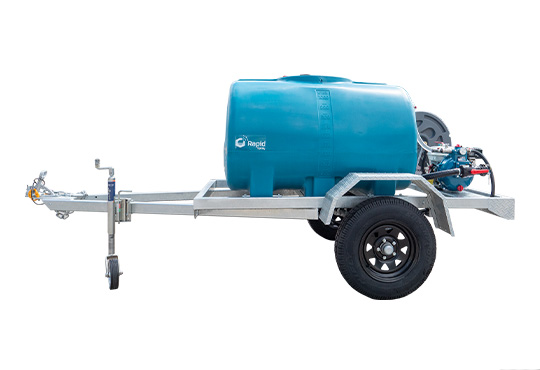
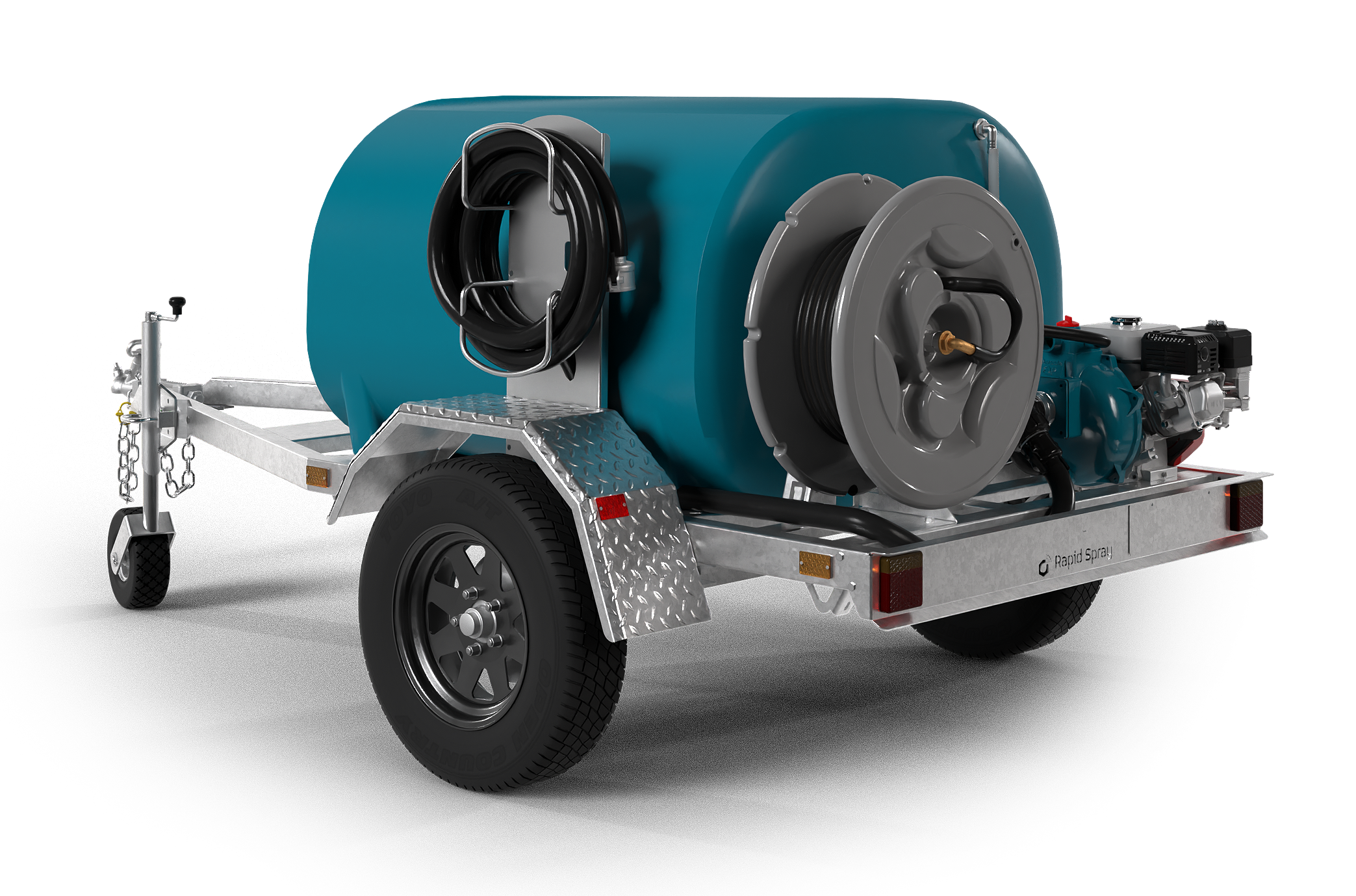
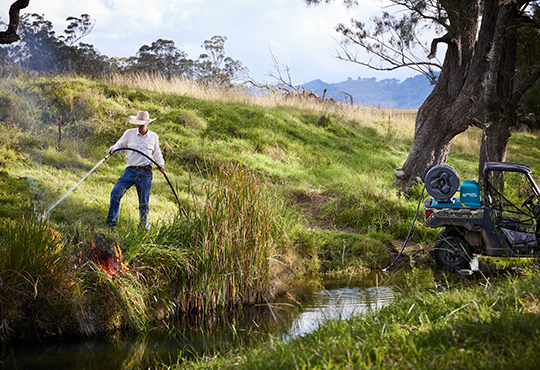
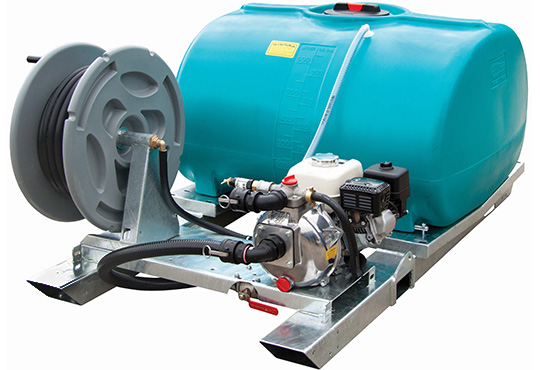
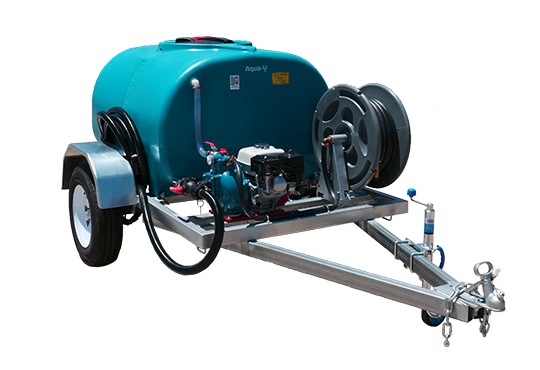
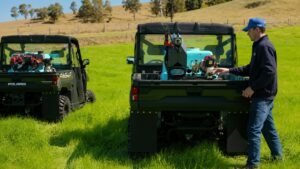
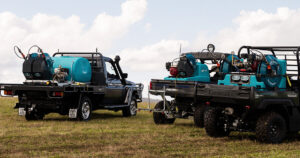
Rapid Spray designs and builds Australian-made spraying equipment for properties that need reliable performance across tough country. Whether you’re treating large paddocks with a ute-mounted sprayer or targeting weed infestations with a UTV-mounted unit, there’s a setup in our range built for the job.
Browse our pasture spraying equipment or talk to our team about the right solution for your property.
Frequently Asked Questions
What is vegetable matter in wool and why does it matter?
Vegetable matter (VM) is the term used for any plant material, including seeds, burrs, and stems, that ends up in a fleece during grazing. It matters because it directly affects the price wool attracts at auction. High VM loads mean buyers discount the fleece to cover their extra processing costs, and in severe cases, the wool has to go through carbonising before it can be used.
Which weeds cause the most damage to wool quality?
Burr-producing species like Noogoora burr and Bathurst burr are among the worst offenders for VM contamination because their hooks make them extremely difficult to remove from wool fibres. For animal health, Patterson’s Curse and certain Nightshade species are serious risks, while Barley Grass and Spear Grass cause physical injury through seed penetration.
How does poor pasture affect wool fibre strength?
When weeds outcompete productive pasture grasses, sheep don’t get the nutrition they need to grow strong, consistent wool. Nutritional stress causes a weak point to form along the wool staple, known as a break. When the fleece is processed and spun, the fibre snaps at that point rather than drafting cleanly, which reduces staple length and lowers the value of the end product.
When is the best time to spray for weeds on a sheep property?
The most cost-effective time to spray is before weeds set seed. Treating weeds early in their growth cycle prevents them from spreading further, reduces the seed bank in the soil, and limits the window during which seeds can contaminate the fleece. A well-timed spray in autumn or early spring, depending on the weed species, will always be more efficient than trying to manage a fully established infestation.
Can weed staining in wool be fixed during processing?
In most cases, no. Organic pigments leached from weed seeds bind to the wool fibre and resist standard scouring. Unlike soil-based contamination, which can often be washed out, these stains tend to be permanent. Affected wool is generally unsuitable for light-coloured or pastel dye lots, which can be a significant problem for growers producing fine wool for apparel markets.
Is weed control worth the cost on a wool property?
Yes, consistently. The cost of a well-timed spray programme is almost always lower than the combined impact of reduced wool prices, higher processing costs, veterinary bills, and lost livestock. Growers who manage weeds proactively tend to see better clip presentation, healthier sheep, and stronger returns at auction over time.

Select A Dealer
No dealer selected